West Nile virus in the news: BPRC studied vaccines
West Nile virus has been in the news a lot recently. BPRC researchers are closely following developments. In the past, they studied candidate vaccines.
“It is wise to keep a close eye on viruses like this.” Virologist Ernst Verschoor knows what he is talking about. More than ten years ago, he was involved in European research at BPRC into a candidate vaccine against West Nile virus. A virus that has now suddenly come very close to home. The Dutch National Institute for Public Health and the Environment (RIVM) recently reported that eighteen people have contracted West Nile virus in the Netherlands. Three people have died.
Around 2014, when Ernst Verschoor and his colleagues were working with the virus, cases of disease were mainly reported in Italy, Greece, Austria and Hungary. In recent years, the virus has been found in many more parts of Europe, and infections are now also being identified in the Netherlands. Ernst and fellow virologists are closely following these developments. “It is remarkable that, after so many years, the subject has suddenly become so relevant again.”
The common house mosquito
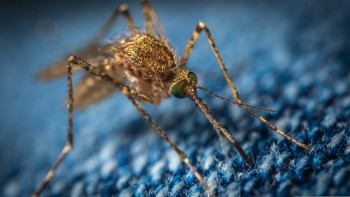
When people think of West Nile virus, they may picture a distant journey or an exotic mosquito. But the virus can be transmitted by a mosquito we all know: the common house mosquito, Culex pipiens. It becomes infected when it feeds on the blood of an infected bird. The mosquito can then transmit the virus to a human or horse.
Birds and mosquitoes form the natural transmission cycle of the virus. One advantage compared with some other viruses is that humans and horses can become ill, but cannot transmit West Nile virus themselves.
Most people do not notice an infection at all. Around eighty per cent develop no symptoms. One in five people develops flu-like symptoms, including fever, headache, muscle aches and fatigue. In around one per cent of infections, the virus can cause serious neurological symptoms, such as meningitis or encephalitis. In some cases, people can even die from the infection. Older people and those with weakened immune systems are particularly at risk of developing more severe disease, Ernst explains.
The virologist cannot explain why the virus is now being detected more frequently. What is clear, however, is that West Nile virus is typically a summer and autumn virus. Mosquitoes are active in July, August and September. They also thrive during warm summers such as the one we have had this year. Better diagnostics and increased awareness of the virus may also mean that infections are being detected more frequently.
First finding out which model works
Ernst explains that BPRC became involved at the time in WINGS, a European research project on West Nile virus. Researchers from countries including Germany, Italy, Belgium, Sweden and the United States worked together on diagnostics and vaccine development.
“The role of BPRC was to study the virus and test candidate vaccines. Before such a study can begin, you first need to determine which research model is suitable,” the virologist explains. BPRC researchers therefore investigated whether rhesus macaques and marmosets were susceptible to a European strain of the virus and how infection progressed in these animals.
Both primate species were found to be susceptible to infection. For the follow-up research, the researchers chose rhesus macaques. In these animals, they were able to closely monitor what happened in the blood after vaccination and exposure to the virus.
Two vaccine strategies
During the vaccination study, twelve rhesus macaques received one of two candidate vaccines. Both were based on a protein found on the surface of West Nile virus. Six animals did not receive a vaccine and formed the control group.
After vaccination, all animals were exposed to a European strain of West Nile virus. In the vaccinated animals, no virus could be detected in the blood after exposure. This was not the case in five of the six animals in the control group, in which the virus was detected.
This was a clear result. Both vaccine strategies produced a strong immune response. Nevertheless, according to Ernst, this does not mean that the Netherlands should immediately focus on vaccination. “The risk of infection is still small, and most people who contract the virus do not develop symptoms. There is also the question of who you would vaccinate: the entire population, only older people, or perhaps people living in areas where the virus occurs more frequently?”
“At the moment, I would be more inclined to think about developing antiviral treatments or medicines,” he says. Such treatments could be used when someone becomes infected and develops symptoms. This could be particularly important for people who are at greater risk of severe disease. According to Ernst, whether a vaccine would ultimately be useful depends, among other things, on who you would want to protect with it.
Old knowledge becomes relevant again
Ernst finds it remarkable that the research has become relevant again after more than ten years. At the time, West Nile virus was still relatively uncommon in Europe and, from a Dutch perspective, seemed like a distant threat. Infections are now also being identified here. “It is a virus that is receiving attention again. That makes it worthwhile to look at what we can do with the knowledge we have.”
West Nile virus belongs to the flavivirus family, the same family of viruses as dengue, Zika and yellow fever. Over the years, BPRC has also conducted research into several of these related viruses. The knowledge and experience gained through this work can once again be valuable when a virus emerges or spreads further.
