BPRC researchers piece together the Long COVID puzzle
BPRC researchers investigate what happens in the body and brain after a SARS-CoV-2 infection, helping to piece together the puzzle of Long COVID.
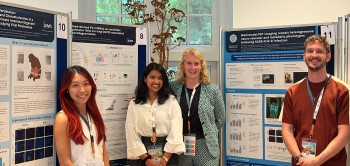
Why does one person develop long-term symptoms after a coronavirus infection while another does not? And what happens in the body and brain? BPRC researchers Julia van der Bie and Anouk Dijkstra are trying to answer these questions. Dutch newspaper AD spoke to the two young researchers about their work and the international Long COVID conference in Amsterdam.
An estimated tens of thousands of people in the Netherlands experience severe long-term symptoms following an infection with SARS-CoV-2. Yet it is still unclear why some people develop post-acute infection syndromes (PAIS), such as Long COVID, while others do not. There is also currently no effective treatment.
PhD students Julia van der Bie and Anouk Dijkstra are investigating at BPRC what happens in the body in the longer term following a SARS-CoV-2 infection. At the international Long COVID conference in Amsterdam, they presented their findings to researchers from around the world. BPRC researcher Gunjan Bawne also presented her research in a poster at the conference. Gunjan investigates which biological changes occur following a SARS-CoV-2 infection and what role they may play in long-term neurological symptoms.
Different responses to the same infection
Research in macaques can help answer questions that are difficult to investigate in patients. In humans, for example, it is not always known which virus variant caused the infection or exactly how severe the initial infection was.
Because researchers can monitor the animals before infection, they can compare changes before and after infection.
One striking finding is that animals can respond very differently to the same infection. This occurs even when they are infected under controlled conditions with the same amount of the same virus variant.
These differences may provide clues as to why one person develops long-term symptoms following a SARS-CoV-2 infection while another does not.
Looking at the body and brain
Julia uses PET-CT scans, among other techniques, to monitor animals before and after infection. These scans allow her to visualise changes in the body and investigate how they develop over time.
Her colleague Anouk focuses, among other things, on changes in the brain. The researchers found changes in brain cells involved in inflammatory responses. They also detected substances in the cerebrospinal fluid that are released when brain cells are damaged.
This does not mean that the cause of Long COVID has been identified. However, the results do provide new clues about processes that may play a role following a SARS-CoV-2 infection.
‘You need each other’s perspectives’
This is precisely why sharing results is so important. More than two hundred symptoms have been described for Long COVID, and there are major differences between patients. No single study can explain such a complex condition on its own.
“You need each other’s perspectives to identify connections and move the research forward,” Julia told AD.
At the conference, the BPRC researchers were able to compare their findings with results from patient studies and other research methods. “We try to link what we see in our animals to what other researchers find in humans,” Julia explained. Anouk also received recognition for her work at the conference, winning an award for her presentation.
Closer to a treatment
The ultimate goal is clear: to better understand which biological processes play a role in Long COVID and what potential leads this may provide for treatment.
To achieve this, many different pieces of the puzzle need to be brought together, from patient studies and laboratory models to imaging and animal research. International collaboration and the sharing of research findings are essential.
The puzzle is not yet complete, but more and more pieces are becoming visible. The challenge now is to discover how all this knowledge fits together. This is precisely where the strength of collaboration lies. The new contacts and collaborations established during the conference provide valuable opportunities to connect knowledge and take the next steps together.
