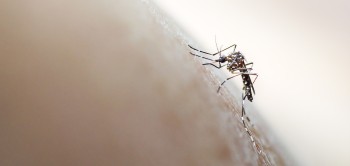
Mosquito expert Marieta Braks of the RIVM discusses West Nile virus in the Netherlands, the spread of the tiger mosquito and the importance of effective surveillance.

“In the future, when dealing with outbreaks of infectious diseases and pandemics, we also need to pay attention to the effects on the brain,” says Juliana Nieuwland.
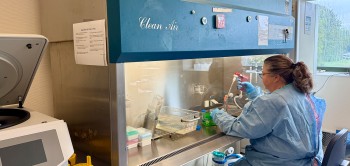
Researcher Claudia explains how a laminar flow cabinet protects both herself and her research when working with biological material.

ParkinsonNederland visited BPRC for an update on research into brain changes after SARS-CoV-2 infection and their possible link to Parkinson’s disease.
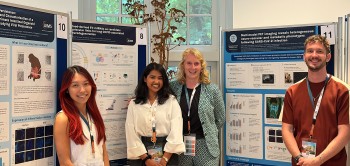
BPRC researchers investigate what happens in the body and brain after a SARS-CoV-2 infection, helping to piece together the puzzle of Long COVID.

More than thirty years after pioneering HIV research at BPRC, the work is still generating new scientific insights. A new PNAS study shows how HIV may influence the genetic composition of human populations over time.

Researcher Kari-Pekka Skarp explains why methods papers are essential for reliable science. By documenting every step of an experiment in detail, other researchers can reproduce and build on the findings. In this way, laboratory models and open science help accelerate the development of new treatments.

Researcher Magdalena Lorenowicz is working on a promising treatment to reduce complications after stem cell transplantation in children. Using mesenchymal stromal cells (MSCs), she aims to improve survival rates. Innovative laboratory models are helping to pave the way for personalised therapy.

Researcher Gunjan Bawne investigates how viral infections may contribute to Alzheimer's and Parkinson's disease. Using blood analyses, stem cells, and innovative models, she aims to identify early signs of neurodegenerative diseases.

BPRC participated in the international CEPI meeting on preparing for future pandemics. Global collaboration, scientific expertise and research infrastructure are essential for the rapid development of vaccines and medical countermeasures. As part of the CEPI network, BPRC contributes to better preparedness for future health threats.

“We knew something wasn’t right, but we couldn’t pinpoint exactly what it was,” says veterinarian Merel Wegman.
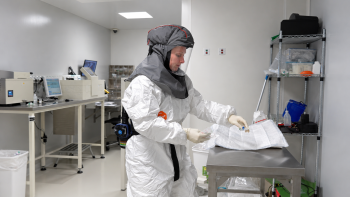
A feature in the Reformatorisch Dagblad offers a behind-the-scenes look at BPRC, from animal care to research on long COVID and malaria. It shows how animal models and animal-free innovations work together to advance scientific understanding and the development of new treatments.
1 2