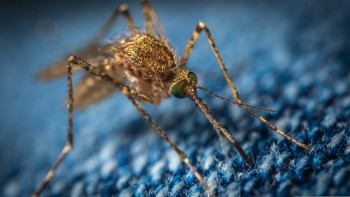
West Nile virus deserves attention, but so does the tiger mosquito
Mosquito expert Marieta Braks of the RIVM discusses West Nile virus in the Netherlands, the spread of the tiger mosquito and the importance of effective surveillance.
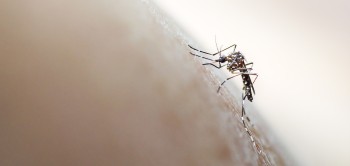
West Nile virus first emerged in the Netherlands several years ago. After that, things remained relatively quiet. This year, 44 people became ill and five died. Mosquito expert Marieta Braks of the Dutch National Institute for Public Health and the Environment (RIVM) monitors where the virus occurs and how mosquitoes transmit it to people and horses. She is also keeping a close eye on the spread of the tiger mosquito.
West Nile virus circulates between birds and common house mosquitoes. Mosquitoes that have bitten an infected bird can subsequently transmit the virus to people and horses. The tiger mosquito can spread other viruses, including those that cause dengue and chikungunya. According to Marieta Braks, the point at which this mosquito becomes permanently established in the Netherlands is getting closer.
A mosquito does not have to be exotic to transmit an exotic-sounding virus. The common house mosquito can spread West Nile virus. The mosquito was already here, and now the virus is too. Marieta Braks, a medical entomologist at the RIVM, has been monitoring the virus for more than twenty years.
Since the beginning of this century, West Nile virus (WNV) has been circulating in Southern and Eastern Europe. It was unclear whether and when it would emerge in Western Europe, so developments across Europe were closely monitored. That changed when the virus appeared in Germany in 2018. “We immediately set up a working group.”
This One Health working group monitors birds, mosquitoes, horses and people. The virus circulates between birds and mosquitoes. People and horses can become infected, but they do not transmit the virus further. “Ideally, you want an early warning system that detects circulation before the virus spills over into people and horses.”
A common whitethroat as the first warning
In 2020, the first clear signal in the Netherlands came from a common whitethroat. The bird was caught at a bird-ringing station and, by coincidence, had already been tested earlier that year. At that time, it was not infected. “Months earlier, it had still tested negative, and now suddenly it was positive. You sample hundreds of birds and then suddenly one turns up positive,” says Marieta Braks.
This year, the first positive bird was found in early August. Not long afterwards, an infection was detected during screening by the blood bank. By now, 44 cases of illness in people have been reported and five people have died.
Remarkably, according to Marieta, 2026 has not been a good year for mosquitoes at all. “We’ve had a very poor mosquito year, in terms of numbers.” The fact that there have nevertheless been relatively many infections is mainly due to the high temperatures this year.
A mosquito that bites an infected bird cannot transmit the virus immediately. First, the virus has to multiply inside its body. The warmer it is, the faster this happens. “If it takes three weeks, the mosquito may already be dead before it has transmitted the virus.” A mosquito takes a blood meal every two to three days.
In extremely warm weather, an infected mosquito can infect another bird much sooner, followed by another and another. This can rapidly increase the spread of the virus among mosquitoes and birds, also increasing the likelihood of spillover to people and horses.
‘My 87-year-old mother sleeps under a mosquito net’
The 44 known cases of illness represent only a proportion of all infections. Many people notice little or nothing after becoming infected. Only a small proportion become seriously ill. For public health as a whole, the burden of disease is therefore relatively limited, Marieta says. However, the risk of severe illness increases with age, particularly from around the age of 50.
“In terms of the overall burden of disease in the Netherlands, this barely makes a ripple.” But that does not mean she dismisses the risk. There is no reason to panic, but there is reason to protect yourself when the virus is circulating in your area, she says. “I’ve even put my 87-year-old mother under a mosquito net.”
According to Marieta, genetic research suggests that the virus remained in the Netherlands over the past winter. “The virus that is here now is very similar to what circulated last year. So we think it overwintered.” This increases the likelihood that West Nile virus will become permanently established here.
During a small outbreak, the virus may disappear if all infected mosquitoes die. During a large outbreak, there are many more infected mosquitoes. “Suppose you have 100,000 infected mosquitoes. Only two of them need to survive. They bite a bird the following year and then the virus is back.”
That does not mean that dozens of people will become ill again next year. It does mean that the virus may no longer need to be reintroduced into the Netherlands from abroad.
Vaccine or medicine?
More than ten years ago, the BPRC conducted research into two candidate vaccines against West Nile virus. Both showed promising results. Nevertheless, according to Marieta, further development of a vaccine for humans is not the most obvious route at present. If the number of severe cases remains limited, the cost-benefit ratio is unfavourable. There is currently no West Nile virus vaccine for humans available internationally either.
She sees another route as more interesting: a medicine for people who actually become ill. When asked what could be developed for West Nile virus, her answer is clear: “I would develop an antiviral drug.”
It also remains important to know where the virus is circulating. This is necessary for the blood supply, for example, because West Nile virus can be transmitted through infected donated blood. “The biggest gain is knowing where and when it is circulating in the country, so that you can screen based on risk rather than screening everything.” But Marieta is also looking ahead to another mosquito. “Next year, you can call me about the tiger mosquito, because that will be a completely different story.”
Tiger mosquitoes have been found in the Netherlands since 2005. Climate change is helping the mosquito thrive in Europe, but according to Marieta, it does not explain how the mosquito gets here. Above all, the mosquito travels with people and goods. “First it arrived with lucky bamboo from China, then with tyres from Florida, followed by tyres from Italy and elsewhere in Europe, and more recently also in cars belonging to holidaymakers returning from Southern Europe.” “But these creatures are cold-blooded animals, so of course climate change has an effect, particularly on the risk of disease transmission because it accelerates virus replication inside the mosquito.”
So far, tiger mosquitoes found in the Netherlands have been traced and controlled. But it is becoming increasingly difficult to prevent the tiger mosquito from becoming permanently established in the country. “We simply have too many introductions.”
If the tiger mosquito stays
If the tiger mosquito becomes permanently established here, local transmission of dengue and chikungunya could also occur. Both diseases can cause significant symptoms.
For this to happen, someone must first contract the virus abroad and then be bitten by a tiger mosquito in the Netherlands. The mosquito can pick up the virus from the person’s blood. Once the virus has multiplied inside the mosquito, it can be transmitted to another person through a subsequent bite. This means someone could contract dengue or chikungunya without having travelled abroad themselves.
People who experience few or no symptoms are particularly difficult to identify. As a result, a virus may already be circulating before it becomes clear what is happening. In the longer term, Marieta therefore sees more potential in vaccination than in endlessly trying to control the mosquito. The BPRC has conducted research into dengue and contributed to the development of an antiviral drug against the dengue virus. This drug is now being investigated further in clinical trials.
The Netherlands has not reached that point yet. However, central government, in consultation with the Municipal Public Health Services (GGDs) and municipalities, is preparing for the point at which it is no longer possible to eradicate the tiger mosquito everywhere. At that stage, it will become increasingly difficult to wait until the first patient is identified before taking action. That patient is only the tip of the iceberg of infected people who may infect mosquitoes without experiencing symptoms themselves. As Marieta puts it: “With dengue, you are always one step behind, so preventing mosquito vectors is always better than trying to control them once an outbreak occurs.”